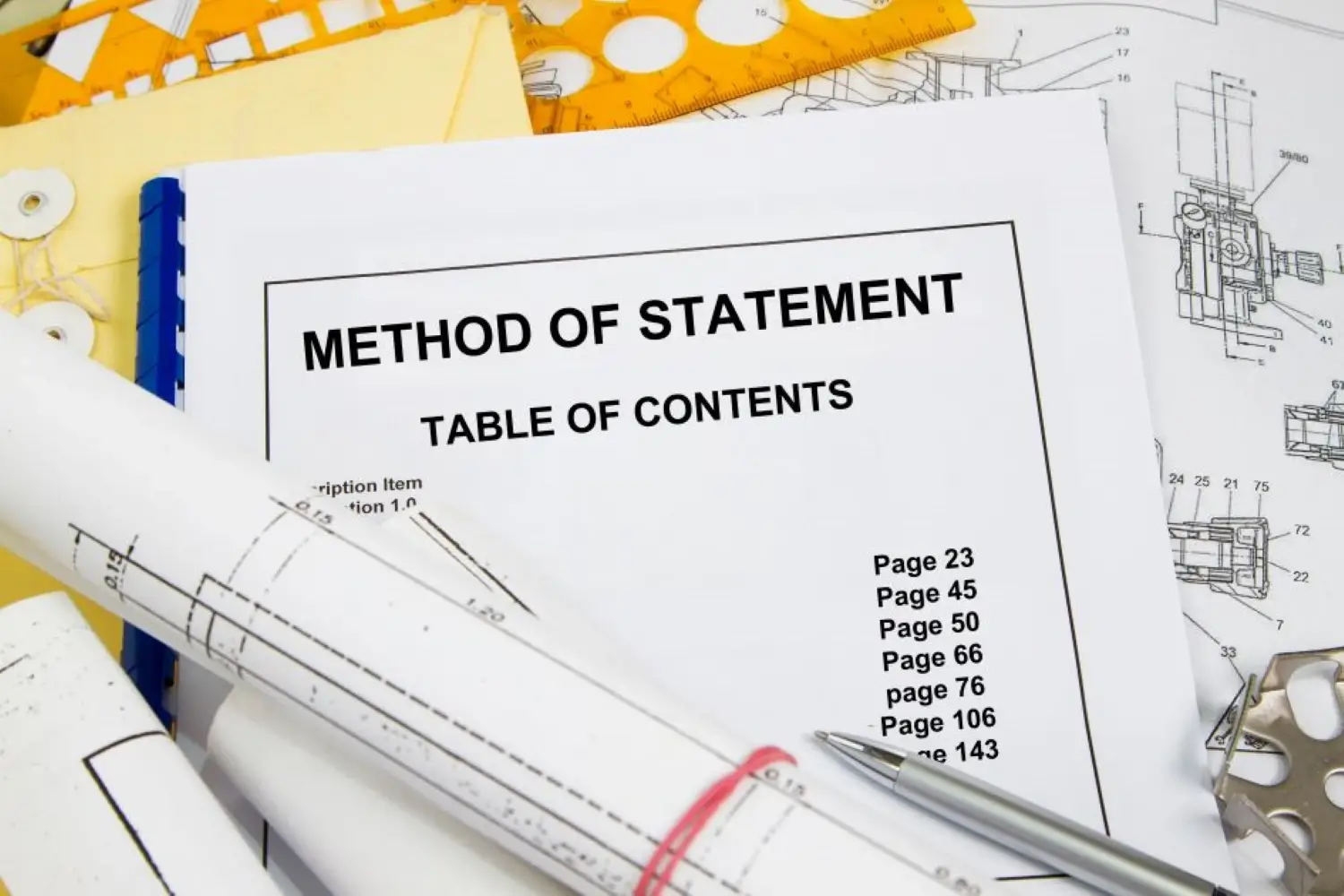
You may have been asked by a client or Principal Contractor to provide a method statement or RAMS before starting work – but what exactly should one contain?
Method statements are commonly used across construction and other higher-risk industries to explain how a particular task or activity will be carried out safely.
When prepared properly, a method statement gives workers clear instructions, helps communicate the controls identified through the risk assessment and provides clients and contractors with confidence that the work has been properly planned.
In this guide, we explain what a method statement is, when you may need one and what should be included.
What Is a Method Statement?
A method statement is a document that sets out how a particular job or activity will be completed in a safe and organised way.
It usually describes the work step-by-step, including the equipment required, the people involved, relevant hazards and the precautions that need to be followed.
Method statements are particularly common within the construction industry, where work can involve multiple contractors, changing environments and higher-risk activities.
Rather than simply identifying what could go wrong, a good method statement explains how the work should actually be carried out.
Are Method Statements a Legal Requirement?
There isn’t a general legal requirement stating that every workplace activity must have a written document specifically called a “method statement”.
However, employers and contractors have legal duties to appropriately plan and manage work and control health and safety risks.
In construction, the Construction (Design and Management) Regulations 2015 (CDM) also place duties on contractors to plan, manage and monitor construction work under their control so that it is carried out without risks to health and safety, so far as reasonably practicable.
A method statement can therefore be a practical way of documenting and communicating how work will be completed safely, particularly for higher-risk or complex activities.
Clients and Principal Contractors may also require method statements or RAMS before contractors are permitted to start work.
Need Help With Your RAMS?
Clear, site-specific Risk Assessments and Method Statements (RAMS) help ensure work is properly planned and that your team understands how to carry it out safely.
Whether you need new RAMS created, existing documents reviewed, or ongoing support, ROI Safety can help with practical documentation tailored to your work and activities.
Get in touch with ROI Safety today to discuss your requirements.
What Is the Difference Between a Risk Assessment and a Method Statement?
Risk assessments and method statements are closely connected, but they serve different purposes.
A risk assessment identifies hazards, considers who could be harmed and determines the control measures required to reduce the risks.
A method statement then explains how the work will be carried out using those controls.
Put simply:
Risk Assessment = What could go wrong and how will we control the risk?
Method Statement = How are we going to carry out the work safely?
Because the two documents work together, they are often combined and referred to as RAMS – Risk Assessments and Method Statements.
What Should a Method Statement Include?
The exact content should reflect the activity being undertaken rather than relying on a generic template.
Depending on the work, a method statement may include:
- Description and scope of the work
- Location of the activity
- Roles and responsibilities
- Required competence and training
- Tools, plant and equipment
- PPE and RPE requirements
- Materials or hazardous substances
- Sequence of work
- Relevant control measures
- Access and working-at-height arrangements
- Emergency procedures
- Waste and housekeeping arrangements
The level of detail should be proportionate to the work and risks involved.
Most importantly, someone carrying out the task should be able to read the method statement and understand what they are expected to do and how they should do it safely.
Avoid Generic Method Statements
One of the biggest problems with method statements is the use of generic documents that don’t reflect the actual project or activity.
Copying an old method statement, changing the project name and sending it to a client may be quick – but it can result in important site-specific risks being overlooked.
For example, access arrangements, other contractors, occupied premises, site rules, equipment, substances or emergency procedures may be completely different from one project to another.
Method statements should therefore be reviewed and adapted to reflect the actual work, site conditions and risks.
Who Should Read the Method Statement?
A method statement isn’t just a document for the client or Principal Contractor.
The people carrying out the work need to understand the safe method they are expected to follow.
Relevant workers should therefore be briefed on the RAMS before starting the activity and given an opportunity to raise questions or concerns.
Supervisors also play an important role in ensuring the method is followed and identifying when circumstances have changed.
If the planned method no longer reflects what is happening on site, workers shouldn’t simply continue because the paperwork has already been signed.
The work should be reassessed and the method reviewed where necessary.
When Should a Method Statement Be Reviewed?
Method statements should remain relevant to the work being undertaken.
A review may be needed where:
- The scope of work changes
- Site conditions change
- Different equipment or materials are introduced
- New hazards are identified
- The planned sequence of work changes
- An accident or near miss occurs
- The existing controls are found to be ineffective
This is particularly important on construction projects, where working conditions can change quickly.
Why Good Method Statements Matter
A well-prepared method statement does more than satisfy a client’s paperwork requirement.
It provides a clear plan for carrying out work, communicates important safety precautions and helps supervisors and employees understand what is expected.
Effective method statements can also help businesses demonstrate that work has been properly considered and planned before employees or contractors are exposed to risk.
Ultimately, the document should be practical, understandable and relevant to the work being undertaken.