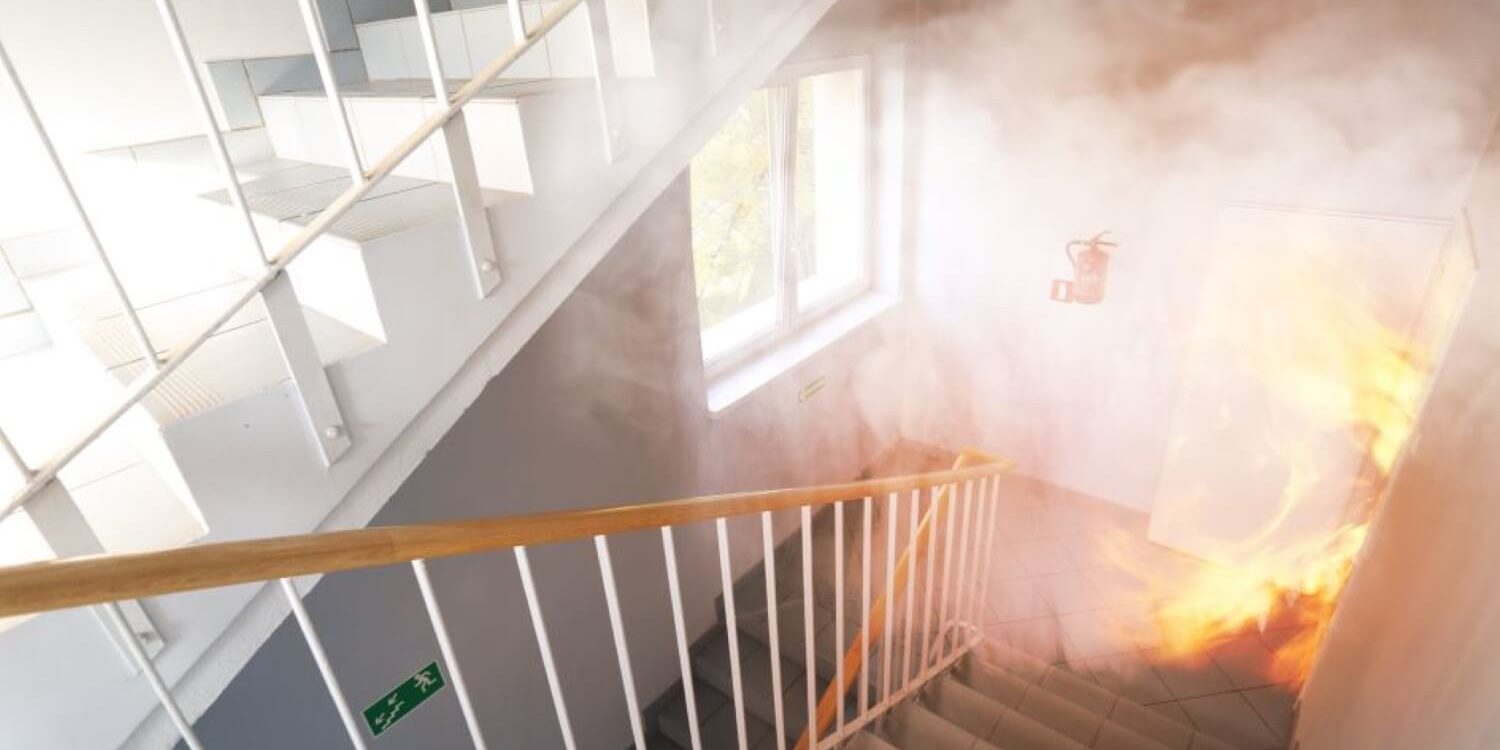
When was your workplace fire risk assessment last reviewed?
Fire safety is an essential responsibility for businesses. A fire can put employees, customers and visitors at risk, cause significant property damage and seriously disrupt business operations.
One of the most important steps in managing that risk is having a suitable and sufficient fire risk assessment.
But what does a fire risk assessment actually involve, who is responsible for it and how often should it be reviewed?
In this guide, we explain what businesses need to know about workplace fire risk assessments and how they help protect both people and premises.
What Is a Fire Risk Assessment?
A fire risk assessment is a structured examination of your premises to identify potential fire hazards, understand who could be at risk and determine whether suitable fire safety measures are in place.
It isn’t simply about checking whether you have fire extinguishers.
A fire risk assessment considers the wider fire safety arrangements within the premises, including potential sources of ignition and fuel, people who may be particularly vulnerable, escape routes, fire detection and warning systems, emergency procedures and staff training.
The findings are then used to identify whether additional precautions or improvements are required.
Are Fire Risk Assessments a Legal Requirement?
For premises covered by the Regulatory Reform (Fire Safety) Order 2005 in England and Wales, the Responsible Person has legal duties relating to fire safety, including ensuring that a suitable and sufficient fire risk assessment is carried out.
In a workplace, the Responsible Person will commonly be the employer, although responsibility can also apply to other people who have control of premises.
The fire risk assessment must be recorded and should form the foundation of the fire safety measures put in place within the premises.
Businesses shouldn’t therefore view a fire risk assessment as simply another compliance document. Its purpose is to identify and control risks that could affect people if a fire occurs.
Need a Fire Risk Assessment?
Not sure whether your fire risk assessment is up to date or if your current fire safety arrangements are sufficient? ROI Safety provides professional fire risk assessments, helping businesses identify fire hazards, understand their risks and prioritise practical improvements to protect people and premises.
Get in touch with ROI Safety today to discuss your requirements.
What Does a Fire Risk Assessment Look At?
Every workplace is different, which means a fire risk assessment should reflect the premises and activities taking place within it.
An assessment will typically consider areas such as:
- Potential ignition sources
- Combustible and flammable materials
- Electrical equipment
- Heating and cooking equipment
- Fire detection and alarm systems
- Emergency escape routes and exits
- Fire doors
- Fire-fighting equipment
- Emergency lighting and signage
- Fire evacuation arrangements
- Employees, visitors and contractors
- People who may require additional assistance
- Fire safety information and training
The assessment should identify existing precautions as well as areas where further action may be necessary.
Who Can Carry Out a Fire Risk Assessment?
The Responsible Person can carry out a fire risk assessment themselves if they have the necessary competence to do so.
For simple, low-risk premises, government guidance is available to help Responsible Persons undertake an assessment.
However, where the premises or risks are more complex – or where the Responsible Person does not have the necessary expertise or time – professional assistance may be appropriate.
The important point is that the assessment must be suitable and sufficient for the premises and risks involved.
How Often Should a Fire Risk Assessment Be Reviewed?
A fire risk assessment shouldn’t be completed once and then forgotten.
It must be kept under review and updated where necessary.
A review may be particularly important following significant changes to the workplace, such as:
- Changes to the building or layout
- New equipment or processes
- Changes to occupancy
- Introduction of new hazardous or flammable substances
- Changes to escape routes
- A fire or significant near miss
- Evidence that existing fire precautions may no longer be effective
Regular reviews help ensure that the assessment continues to reflect the workplace as it actually operates.
What Happens After the Assessment?
Once the fire risk assessment has been completed, any findings requiring action should be addressed.
Some improvements may be relatively straightforward, such as improving housekeeping or ensuring escape routes remain clear. Others may require changes to fire detection systems, emergency arrangements, training or other fire precautions.
A professional assessment should provide clear findings and recommendations so the business understands what needs attention and why.
The assessment should then remain part of the organisation’s ongoing fire safety management arrangements rather than simply being filed away.
Why Fire Safety Training Matters
A fire risk assessment identifies the precautions required, but employees also need to understand what is expected of them.
Suitable fire safety training can help employees recognise common fire hazards, understand emergency procedures and know what to do if a fire occurs.
Employees with specific responsibilities, such as Fire Wardens or Fire Marshals, may require additional training relevant to their role.
Combining an effective fire risk assessment with appropriate training, emergency planning and regular monitoring creates a much stronger approach to workplace fire safety.
A professional fire risk assessment can help you identify risks, prioritise improvements and strengthen your workplace fire safety arrangements.